
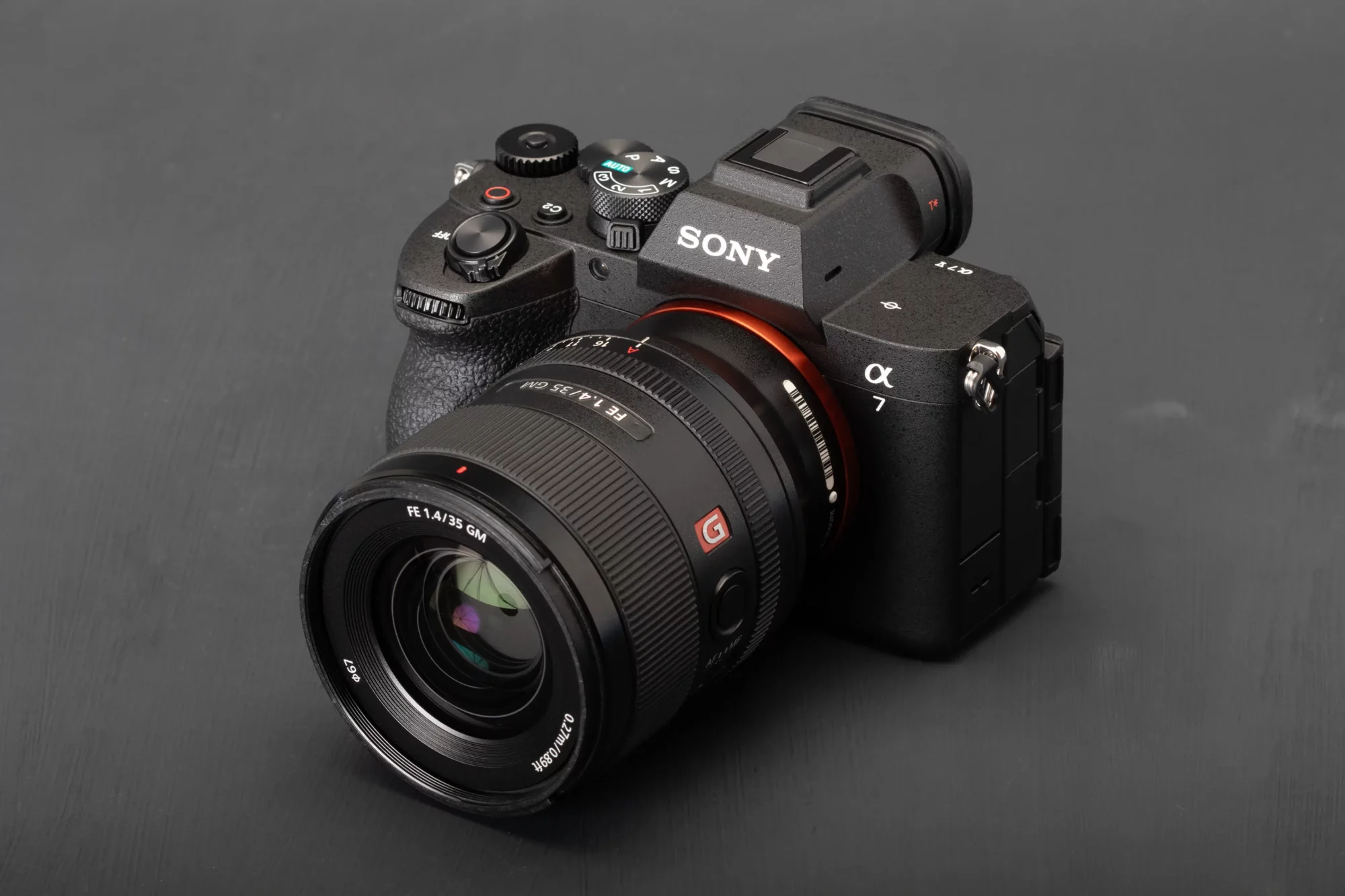
A 61-megapixel sensor that redefines versatility
Lead: Sony has just launched the A7V, and it marks a real turning point in the Alpha range. More pixels, better autofocus, smooth 4K video. But is it really worth upgrading? We’ll tell you all about it.
The mirrorless camera market hadn’t had to wait long for Sony. Since the success of the A7 IV, photographers have been wondering: what would Sony do next? The answer comes in the form of the A7V, a camera that doesn’t revolutionise, but intelligently refines.
The sensor: 61 megapixels, a new perspective
The A7V features the same 61-megapixel sensor previously found on the A7R V. This is a significant step up from the A7 IV’s 33 megapixels. In practical terms, this means more pixels for large prints, greater flexibility when cropping, and better detail retention during aggressive cropping.
But beware: more pixels also mean larger files (150–200 MB per RAW) and greater demands on storage and processing power. For photographers working on standard Macs or laptops, this can quickly become cumbersome.
The real benefit? In high-resolution portraits, landscapes, product photography, or large-format prints, these 61 megapixels become a creative necessity, not a luxury.
Revolutionary autofocus: Taking it to the next level
Sony continues to refine its legendary autofocus system. The A7V features AI Subject Recognition, capable of tracking not only people and animals, but also vehicles, insects, and even birds in flight.
In practice? You set the camera to autofocus, aim roughly in the right direction, and the A7V takes care of the rest. This is particularly impressive in video mode, where human/animal tracking stays ‘glued’ to the subject even as it moves.
For videographers, this is a major boost in efficiency. For sports or wildlife photographers, it offers significant convenience.
4K Video: Smoother, More Creative
The A7V records in 4K at up to 60fps with built-in 5-axis stabilisation. Compared to the A7 IV, this is a qualitative improvement: the footage is smoother, camera shake is better managed, and there are more codec options (S-Log3, Log Profile, etc.).
In other words, whether you’re making YouTube videos, documentaries or Instagram content, the A7V offers you a much wider creative range. You can film in conditions that would have caused blurring on the A7 IV.
However, the A7R V’s 8K video is not available here. Sony has made a choice: to keep the A7V as a solid all-rounder for both photos and video, rather than turning it into a dedicated video machine. It’s a smart choice for generalist creatives.
Who is this relevant for?
You should upgrade to the A7V if:
- You shoot in high resolution (landscapes, studio work, large-format prints)
- You combine photography and videography seriously
- You need flexibility when cropping
- Your budget allows for a body costing 3500+ CHF
The A7 IV remains a sensible choice if:
- You are primarily a photographer (not a videographer)
- The A7 IV’s 33 megapixels are sufficient for you
- You prefer smaller file sizes
- You shoot a lot in raw format
The verdict
The A7V isn’t a revolution — it’s a smart evolution. Sony has listened to users: more pixels, better autofocus, smoother video. It’s a camera for the creative professional who’s serious about their craft, not for the beginner looking for their first camera.
If you own an A7 IV and are happy with it, waiting won’t break the bank. If you’re just starting out, the A7V is excellent, but the A7C II remains more affordable. If you’re a serious videographer, consider the A7S III instead.
The A7V? It’s the camera for those who know what they’re doing and want the tools to